News Details
Enjoying the Beauty of the Coral Archipelago
- Adhek Amerta
- December 24, 2005
Bali is blessed with extraordinary natural beauty, both on land and at sea. Its stunning sandy beaches stretch gracefully across every corner of the island.
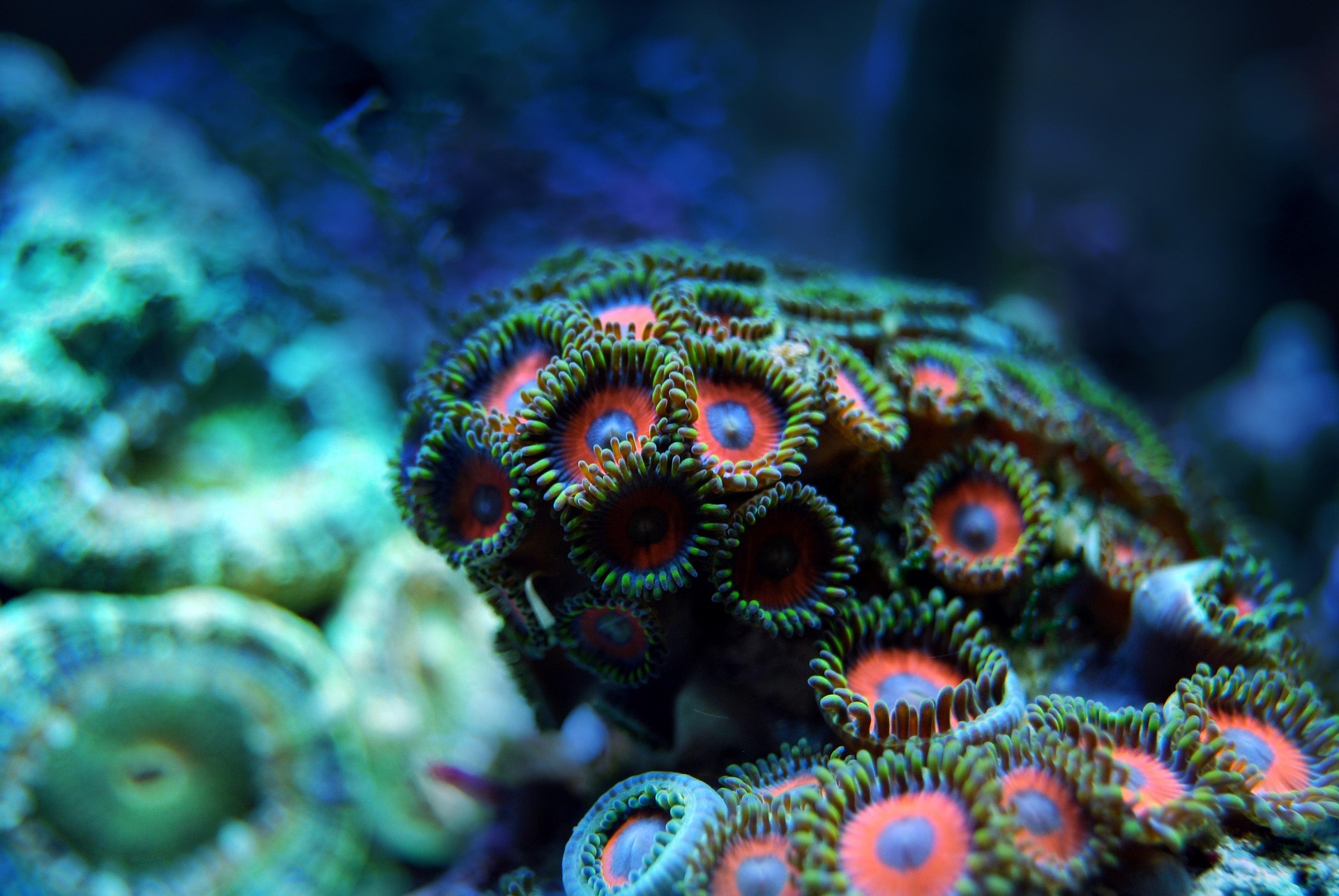
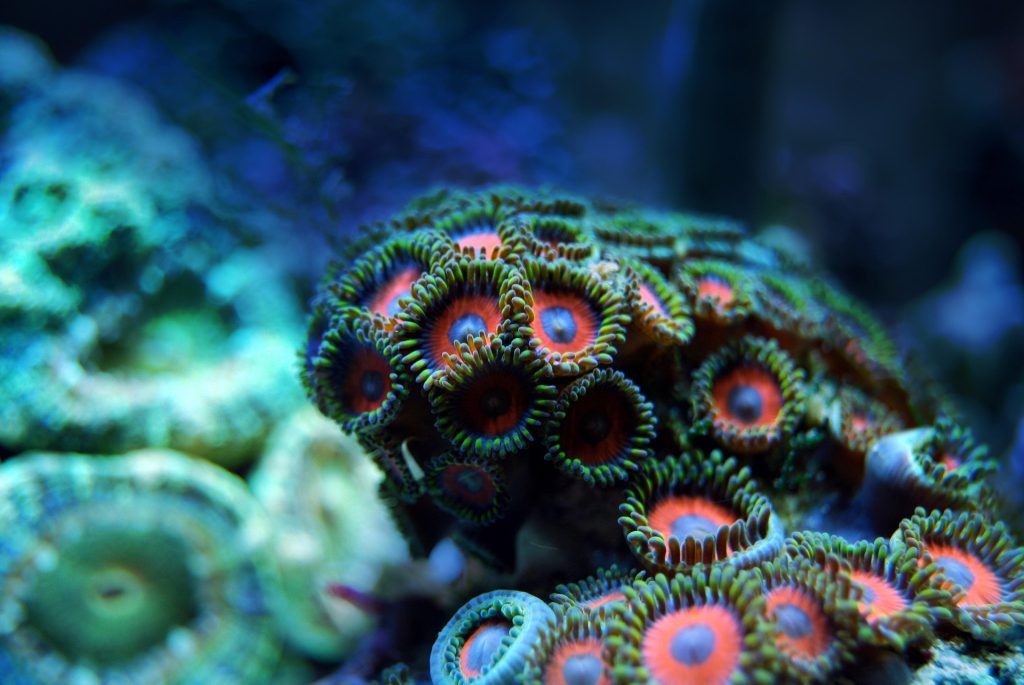
Beyond its coastline, Bali is also home to magnificent marine areas adorned with spectacular coral formations, particularly around Nusa Penida, Nusa Ceningan, and Nusa Lembongan. For fishing enthusiasts and divers alike, these waters provide the perfect setting to indulge in their passion. The following is MM’s journey exploring the marine paradise of Nusa Penida.
From the moment our boat departed Benoa Harbor, MM’s imagination was filled with images of Nusa Penida’s legendary beauty. According to travel guides, the Nusa Penida region is considered one of Bali’s premier marine tourism destinations. International visitors come here to enjoy both the breathtaking ocean views and the remarkable underwater scenery. The coral reefs are said to be pristine and inhabited by numerous large fish species.
Stories shared by tour guides and information from travel literature heightened MM’s curiosity to explore this enchanting destination. This long-awaited opportunity finally became reality when Adhek Amerta and Della, both from the Island of the Gods, invited MM to experience the Nusa Penida waters firsthand.
For MM, being invited by Adhek Amerta to fish in these waters was a great honor. Adhek Amerta is a professional angler in the region, and his expertise is well known—even reaching Japan. Many anglers from the Land of the Rising Sun travel directly to Bali specifically to fish alongside him in the waters of Nusa Penida. Meeting Adhek Amerta—often regarded as a “Maestro of Fishing” in Bali—was truly a privilege.
Nusa Ceningan
As our boat left Benoa Harbor, Adhek Amerta steered toward Nusa Ceningan and Lembongan. Nusa Ceningan, a 306-hectare island southeast of Bali, greeted us with its scenic charm. Although we did not disembark, we admired its beauty from offshore.
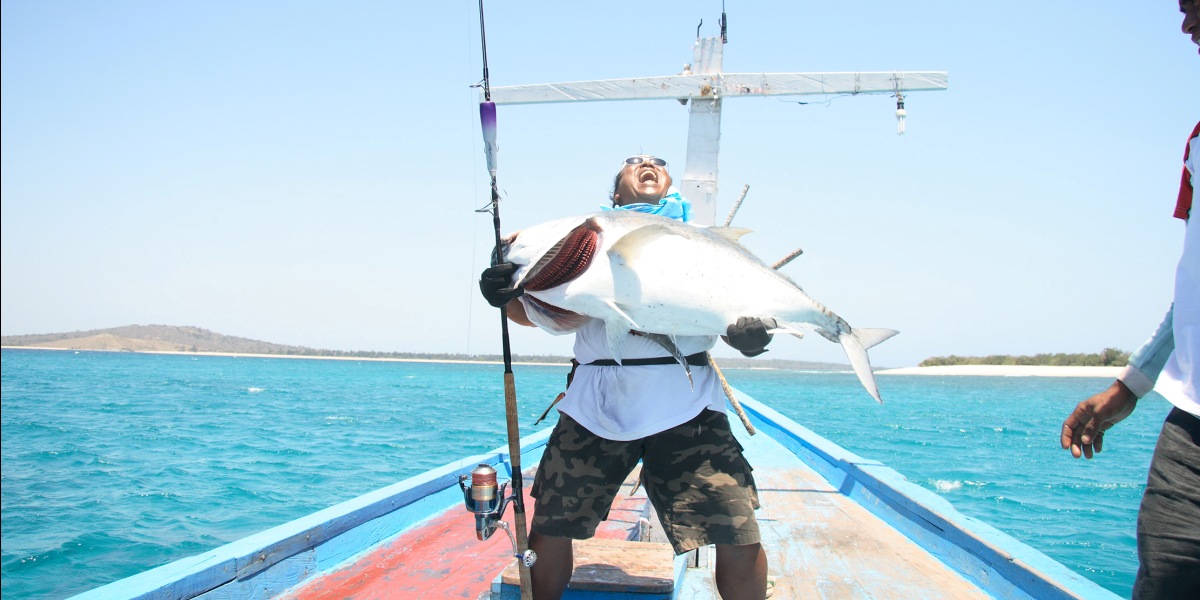
In the waters around Nusa Ceningan, we approached coral formations constantly pounded by the waves. These waters are reputed to be home to giant trevally and other large species. According to Adhek Amerta, he frequently lands giant trevally (GT) in this area.
As we cruised along the island’s outer coastline, we spotted fellow anglers fishing from the rocky cliffs of Nusa Penida. Several of them waved at us as we passed, and we gladly returned their greetings from the boat—an unspoken camaraderie among fishing enthusiasts.
Nusa Penida
After leaving Nusa Ceningan, we slowly made our way toward Nusa Penida. Upon entering its waters, MM was instantly captivated. The sea teemed with schools of small fish, shimmering and leaping across the surface, while seabirds circled above, diving swiftly to seize their prey.
Not far offshore stood rows of coral formations rising dramatically from the sea, forming small rocky islets. The scenery was simply breathtaking. It seemed as though Adhek Amerta intentionally brought MM here to fully appreciate the coral formations of Nusa Penida.
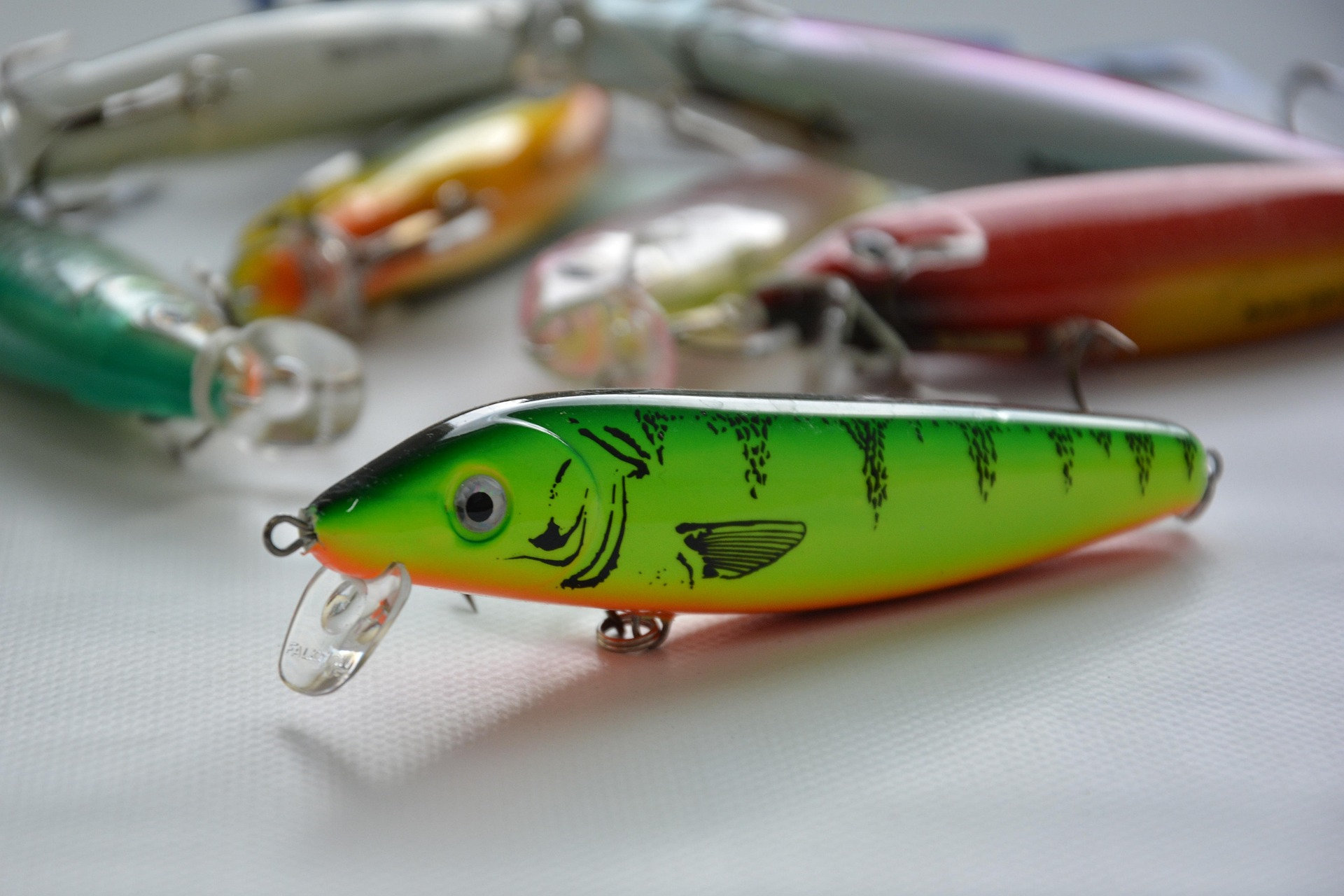
We approached a massive hollow rock formation—an extraordinary natural structure that left us reluctant to leave. Sensing MM’s desire to fish there, Adhek Amerta prepared the rods for a popping session. Wooden popper lures were cast skillfully toward the hollow rock, while we continued admiring the surrounding beauty between casts.
After fishing near the hollow rock, we moved on to other coral areas, observing the steep cliffs of Nusa Penida from the sea. From a distance, the island appears dry and rugged, covering approximately 202.8 square kilometers. Yet despite its arid landscape, the dramatic cliff faces create a striking and unforgettable view. From the open sea, we could even see a temple perched along the island’s edge.
Continuing our journey along the cliffs, the boat headed toward a large rock formation in the middle of the sea. According to Adhek Amerta, this rock is commonly known as Batu Abah, while some locals refer to it as “Shoe Rock” due to its distinctive shape. We approached and fished around Batu Abah, enjoying not only the opportunity to catch fish but also the magnificent scenery. The rock was home to numerous bird species, giving us the surreal feeling of being part of a Discovery Channel documentary.
Our final stop was a small rocky islet known as Bat Rock—a coral outcrop inhabited by thousands of bats. Nearly every branch of the sparse trees was occupied by large bats, while eagle nests could also be seen nearby. It was a truly remarkable sight.
Spending an entire day exploring Nusa Penida, Nusa Ceningan, and Nusa Lembongan still felt insufficient. The beauty of these waters leaves a lasting impression—one that is difficult to erase from memory. Visiting Bali without experiencing Nusa Penida would be like a dish without salt—something essential would be missing.
— Mr. K

Adhek Amerta
About AuthorI am a professional fishing guide, a pioneer of popping techniques, and one of Indonesia’s leading sport fishing enthusiasts based in Bali. I also actively share fishing tips and techniques through social media and my personal blog.