News Details
Jigging – The real sport fishing
- Adhek Amerta
- December 12, 2005
On May 12, 2005, Formasi organized an Anglers Get Together event at the Bank Indonesia building. The event featured four speakers: H.M. Ismeth, Adhek Amerta, Kornelius, and Indra Pattiasina. These fishing experts described jigging as “the real sport fishing” — a method that truly embodies the essence of sport in angling. The following is a paper on jigging presented by H.M. Ismeth.
WHAT IS JIGGING?
Jigging is a deep-water fishing technique that uses a metal jig (artificial lure) instead of live bait. The lure is worked vertically, moving up and down in quick, jerky motions (Move up and down in a quick, jerky way – A.S. Hornby, Oxford Advanced Learner’s Dictionary of Current English, 1983, p.456).
JIGGING EQUIPMENT
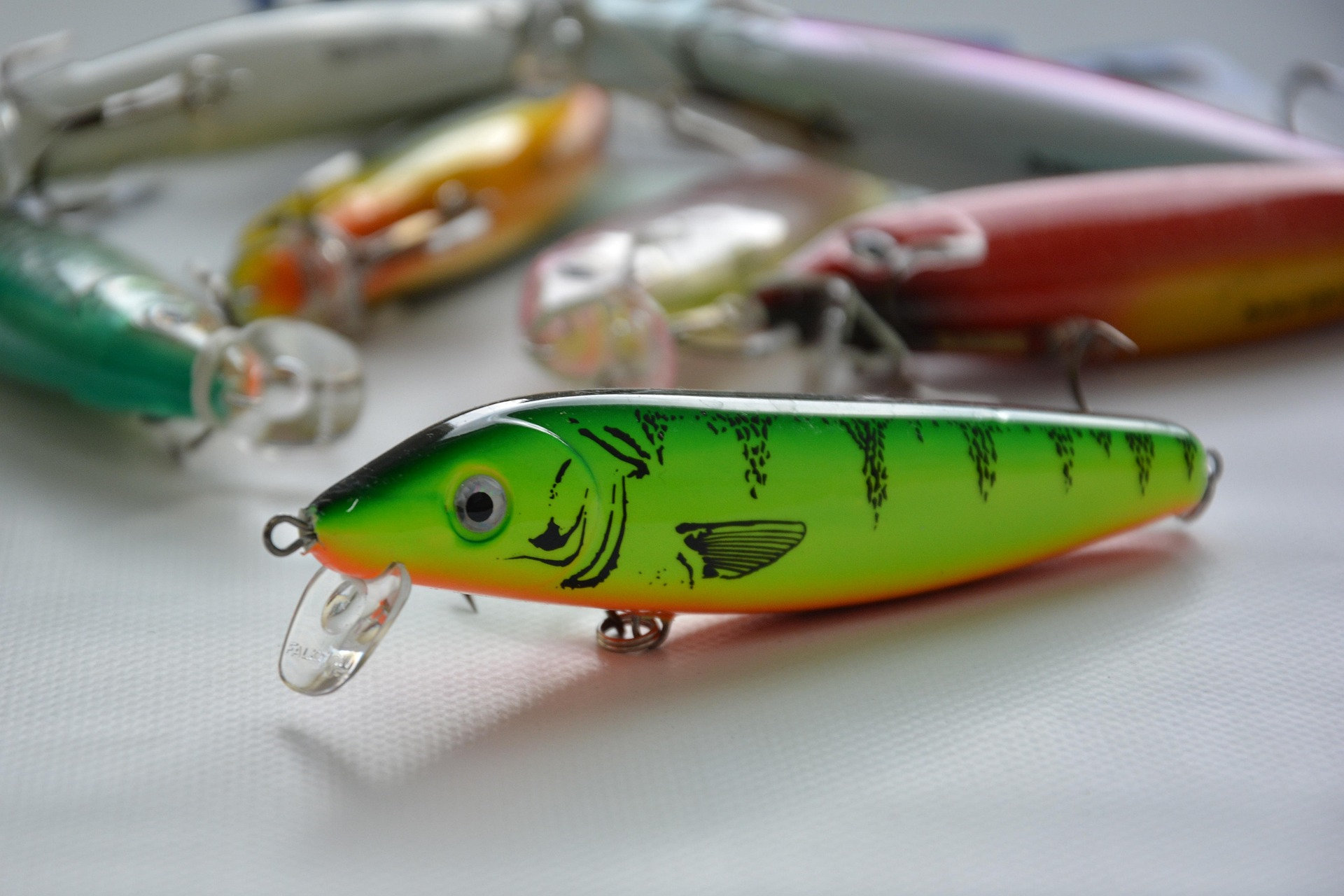
- Metal Jig (Lure)
- The weight of the metal jig should match the rod’s capacity, the fishing depth, and the strength of the current. Color is generally less significant; visibility and the ability to attract fish are more important. The deeper the jigging depth, the more advisable it is to use bright or fluorescent-colored lures.
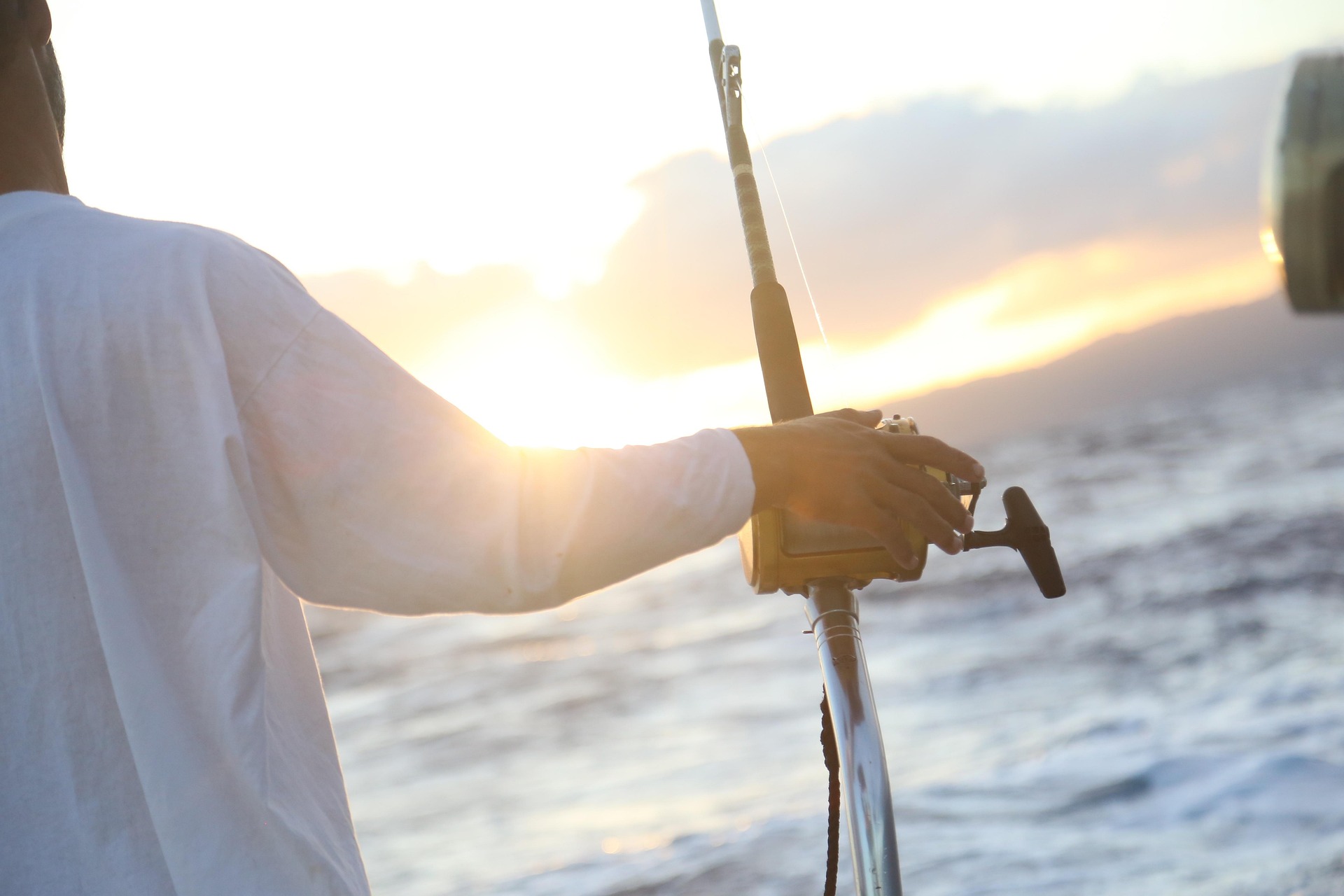
- Reel
- Two main types are commonly used:
- Spinning Reel : Typically preferred with a lower gear ratio to reduce fatigue during retrieval, allowing anglers to jig longer without exhausting themselves.
- Baitcasting Reel : Unlike spinning reels, baitcasters usually have a smaller spool diameter and shorter handle. Therefore, a higher gear ratio is recommended to maintain lively lure action.
- Two main types are commonly used:
- Line
- Braided (PE) and monofilament lines are commonly used. Each type has its own advantages and disadvantages depending on the fishing conditions.
- Rod
- There is no fixed standard for jigging rod length; generally, rods range from 5 to 10 feet. A longer rod produces better lure action but can be more tiring, especially when handling heavy jigs or fighting strong fish. Shorter rods help conserve stamina and offer better control during a fight.
- Leader Line
- Shock leaders made of monofilament are commonly used, typically 1.5 to 2 times stronger than the main line. Leader length generally ranges from 6 to 10 meters. The purposes are:
- To reduce the risk of breakage from abrasion against rocks or the boat’s hull
- To assist crew members in landing the fish
- To absorb shock during strikes
- Shock leaders made of monofilament are commonly used, typically 1.5 to 2 times stronger than the main line. Leader length generally ranges from 6 to 10 meters. The purposes are:
- Swivel and Split Ring
- Allow easy lure changes without cutting the leader
- Reduce line twist during lure action
- Hooks
- Hook size and rigging play a crucial role in success. Early jigging techniques commonly used treble hooks at the bottom. However, due to the high risk of snagging on reefs, treble hooks are now rarely used. Today, most anglers use one or two single hooks with assist rigs attached near the head or mid-body of the metal jig, often using live bait hooks. Hook size should match the jig size. The hook must move freely and not stick to the jig body. If bottom hooks are used, circle hooks are recommended to reduce snagging on coral.
- Gimbal Belt
- Can be either with a pin (similar to trolling belts) or without, depending on the rod butt design.
- Gloves
- Highly recommended, especially when fighting large fish or when hands are wet with sweat, reducing the risk of slipping and injury.
JIGGING LOCATIONS
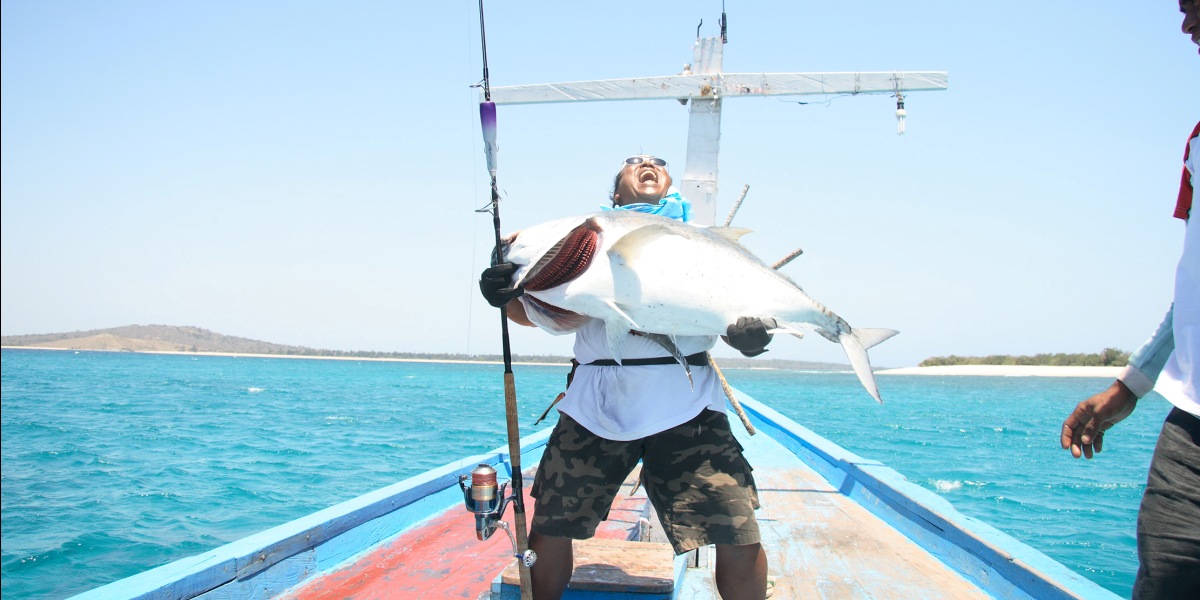
Location selection depends on the target species. In waters with rocky bottom contours, typical targets include grouper, amberjack, ruby snapper, giant trevally (GT), and dogtooth tuna.
- 0–10 meters from the bottom: Grouper
- 0–30 meters from the bottom: Amberjack
- 0–50 meters from the bottom: Dogtooth tuna
For yellowfin tuna, jigging is commonly done around floating fish aggregating devices (FADs) or near pods of dolphins. This technique can be effective up to 100 meters below the surface.
JIGGING ACTION
- Fast Jerking (1:1)
- One rod lift followed by one reel turn.
- Slow Jerking (1:2)
- One rod jerk followed by two reel turns.
- Long Jerking (1:3)
- One long rod jerk followed by three reel turns.
Each angler is free to improvise. The more variations an angler masters, the greater the chances of success. Even for the same species at the same location, different current conditions may require different jigging styles.
JIGGING TIMING
Jigging can be performed at almost any time, depending on current conditions. The 9th to 12th day after the full moon or new moon is often ideal, as tidal movement is generally less extreme during this period.
Wind direction and speed also play important roles, as they influence the boat’s drift speed. A drift speed of 1–2 knots is considered ideal for jigging.
However, the presence of two or three opposing currents can complicate jigging, even when drift speed appears manageable.
DRAG SETTINGS
Drag strength should match the equipment and target species. For powerful species such as amberjack, dogtooth tuna, and yellowfin tuna, excessive drag (>7 kg) can quickly exhaust the angler. A setting of 5–7 kg is generally sufficient.
Using excessively high drag carries the risk of rod breakage. During a fight, the rod angle should ideally not exceed 60 degrees.
LOCATING JIGGING SPOTS AND READING CURRENT PATTERNS
Depth sounders and GPS are essential tools for identifying promising jigging spots. Once a suspected structure—such as a seamount or reef—is located, record its coordinates immediately.
Begin drifting approximately 0.5 miles from the point. Target species such as amberjack and dogtooth tuna often roam up to half a mile from their structure.
If a strike occurs during the drift, record the GPS position. Over time, these strike points help identify productive zones and current patterns.
If no strikes occur, slightly adjust position while continuing to drift. This method allows anglers to better understand the current flow, as changes in current direction often result in changes in strike zones.
— H.M. Ismeth

Adhek Amerta
About AuthorI am a professional fishing guide, a pioneer of popping techniques, and one of Indonesia’s leading sport fishing enthusiasts based in Bali. I also actively share fishing tips and techniques through social media and my personal blog.